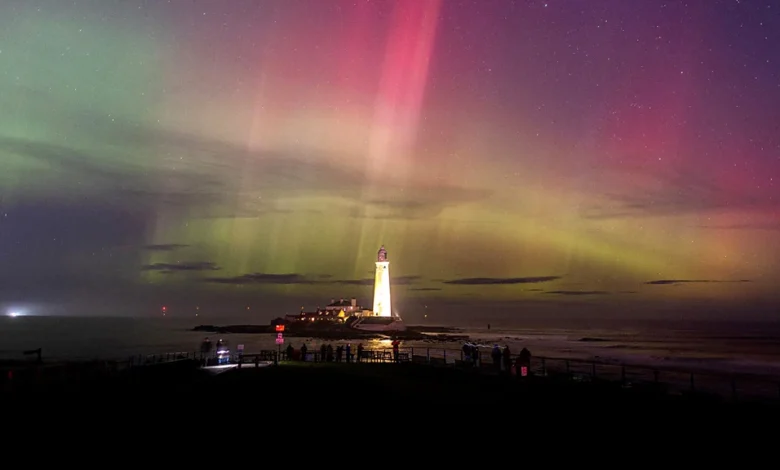
Experts are calling 2026 the “Golden Year” for the Northern Lights. While the solar maximum officially peaked between 2024 and 2025, the “declining phase” of Solar Cycle 25 is currently producing some of the most intense and unpredictable aurora storms in a decade.
Northumberland-based photographer Wil Cheung, who has witnessed the aurora borealis more than 400 times, shares his expert advice on how to catch the greatest light show on Earth during this once-in-a-decade peak.
Why 2026 is the Best Year to See the Northern Lights
The Sun follows an 11-year cycle of activity. In 2026, we are experiencing the “Double Peak” effect. Scientists from NASA and the Norwegian Space Agency have noted that geomagnetic storms often remain elevated and even become more frequent after the solar maximum.
- Increased Intensity: Solar flares and Coronal Mass Ejections (CMEs) are currently more likely to “supercharge” the aurora.
- Further South: Stronger storms in 2026 mean the lights are being spotted as far south as the North of England, Northern US states, and even Central Europe.
Wil Cheung’s Top Aurora Chasing Tips
1. Trust the ‘Equinox Effect’
Wil points out that the weeks around the Spring Equinox (March 20, 2026) and Autumn Equinox (September 23, 2026) are statistically the best times. Due to the “Russell-McPherron effect,” Earth’s magnetic field aligns more effectively with the solar wind during these windows, sparking more vivid colors.
2. Escape the Light Pollution
“Once we started driving, we began to see these huge pillars of light,” Wil recalls of his first trip to Thingvellir National Park. To see the subtle pinks and purples often invisible to the naked eye in cities:
- Head to Dark Sky Parks (like Northumberland National Park).
- Use apps like My Aurora Forecast to track the Kp Index (aim for Kp 4 or higher for UK sightings).
3. Focus on Your Gear
Wil, who now runs guided cruises to Norway and talks at the National Space Centre, emphasizes that modern smartphone technology is a game-changer.
- Night Mode: Most iPhones and Androids can now capture the aurora with a 3-10 second exposure.
- Tripods are Essential: Even a slight shake will blur the “curtains” of light.
Where to See the Lights in 2026
| Location | Best Months | Why Visit in 2026? |
| Norway (Tromsø/Alta) | Oct – March | Directly under the ‘Aurora Oval’ for maximum reliability. |
| Iceland | Sept – April | Stunning volcanic backdrops for astrophotography. |
| Northumberland, UK | During Solar Storms | Peak solar activity makes UK sightings more frequent. |
| Alaska, USA | Nov – Feb | Clear, dark interior skies offer 90% sighting success. |
About Wil Cheung
Wil is a Fellow of the Royal Astronomical Society and an ambassador for Aurorasaurus. He currently hosts stargazing events at the Newcastle Life Centre and posts real-time aurora alerts on his Facebook channel, Wil Photography.