In a major escalation of global trade tensions, President Donald Trump on Monday threatened to significantly increase tariffs on South Korea. The President accused the East Asian ally of failing to ratify a historic trade agreement reached in 2025, signaling a potential return to aggressive protectionist policies.
Trump Signals Hike from 15% to 25% Tariffs
In a post on Truth Social on January 26, 2026, President Trump stated he would raise duties on key South Korean exports. The proposed hike would move current rates from 15% up to 25%, targeting several vital industries:
- Automobiles and Auto Parts (which account for nearly 27% of South Korea’s exports to the U.S.)
- Lumber and Wood Products
- Pharmaceuticals
- Reciprocal Tariffs on various other goods
“Our Trade Deals are very important to America,” Trump wrote. “In each of these Deals, we have acted swiftly to reduce our TARIFFS… We, of course, expect our Trading Partners to do the same.”
The July 2025 Agreement: What Went Wrong?
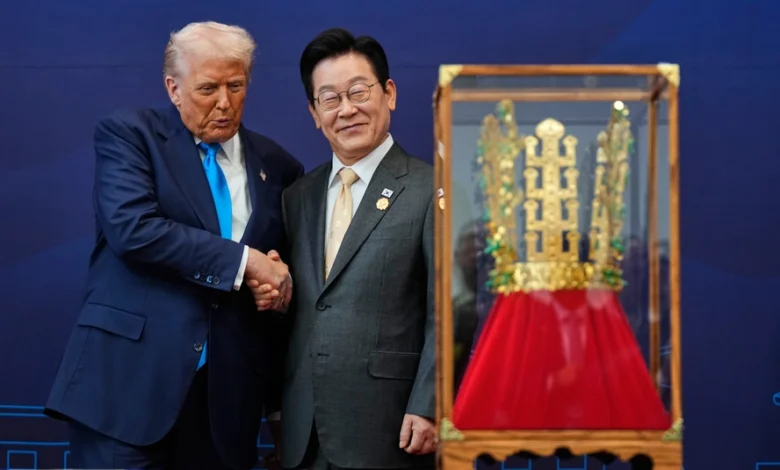
The current friction stems from a “Strategic Trade and Investment Deal” struck between President Trump and South Korean President Lee Jae-myung on July 30, 2025.
Under the terms of that pact, Washington agreed to lower tariffs to 15% in exchange for $350 billion in South Korean investments in the U.S. (specifically in shipbuilding and semiconductors). However, Trump noted that the South Korean National Assembly has yet to enact the agreement into law, leaving the deal in “legal limbo.”
Conflict Over Digital Regulations (Google & Meta)
Beyond the legislature’s delay, the administration has voiced deep concerns over South Korea’s new digital regulations. U.S. officials, including Trade Representative Jamieson Greer, argue that these laws—specifically the “Fairness Act” and amendments to the Network Act—unfairly target American tech giants like Google and Meta.
- December 2025: The U.S. Trade Representative (USTR) canceled high-level meetings after Seoul introduced digital legislation.
- January 2026: South Korean Trade Minister Kim Jung-kwan and Trade Envoy Yeo Han-koo are currently scrambling to meet with U.S. officials to prevent the tariffs from being implemented.
Global Trade Context: A Pattern of Threats
South Korea is not the only nation facing the administration’s “Reciprocal Tariff” strategy. In the first few weeks of 2026, President Trump has also:
- Threatened European nations with tariffs until a deal regarding Greenland is finalized (a threat he later paused).
- Warned Canada of a 100% tariff if Prime Minister Carney pursues a trade deal with China.
While the White House has yet to issue a formal executive order for the South Korea hikes, the threat alone has already impacted markets, sending shares of Korean carmakers like Hyundai and Kia into a brief tumble.